Plinko has emerged as one of the most captivating crash games in the international gambling landscape, particularly in gray-zone markets where players seek sophisticated risk management strategies. Unlike traditional casino games, Plinko’s appeal lies in its combination of visual entertainment and mathematical probability, where understanding ball drop patterns and implementing disciplined bankroll management can significantly influence long-term sustainability. Professional players and casual enthusiasts alike are increasingly recognizing that success in Plinko demands more than luck—it requires a methodical approach to risk assessment and strategic wagering aligned with individual financial capacity.
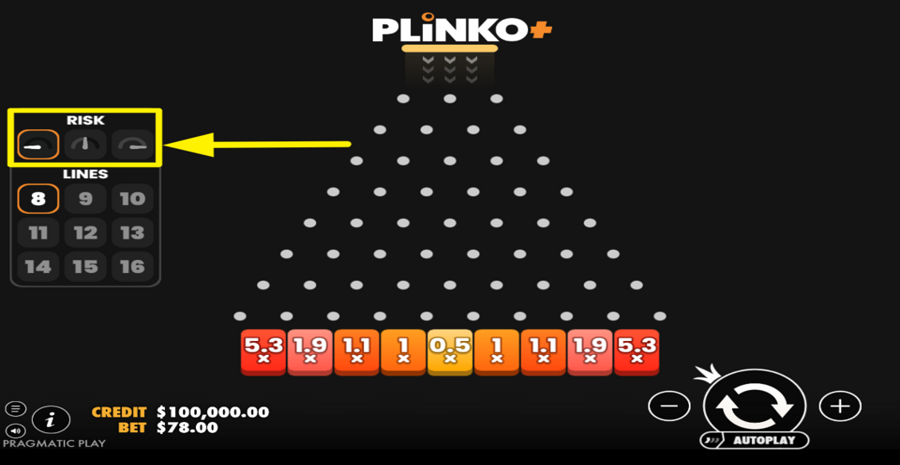
Plinko operates on a tiered risk system that fundamentally alters the probability distribution of outcomes. Most platforms offering Plinko—including providers serving international markets—present players with low, medium, and high-risk configurations. Each risk level directly impacts the potential payout multipliers and the frequency of winning combinations. In low-risk mode, players experience more consistent, modest wins with narrower variance, making it suitable for bankroll preservation strategies. Medium-risk settings introduce greater volatility, offering balanced opportunities for both modest gains and occasional significant wins. High-risk configurations amplify potential returns exponentially but dramatically increase the probability of rapid bankroll depletion.
The mathematical architecture behind these risk levels stems from the pin configuration and payout table structure. Players engaging with platforms like those offering Spribe’s Plinko variant or similar crash game providers understand that the house edge remains constant regardless of risk selection, but the distribution of that edge across individual sessions varies considerably. This distinction is crucial for international players developing sustainable strategies. A player selecting high-risk levels might experience a 40 percent variance in session outcomes, while low-risk selections typically maintain 15 to 20 percent variance, allowing for more predictable bankroll trajectories over extended play periods.
Decoding Ball Drop Patterns and Probability Distribution
Visual Pattern Recognition in Plinko Mechanics
Professional Plinko players have developed sophisticated methods for analyzing ball drop patterns, recognizing that while each individual drop remains subject to random variance, observable trends emerge over sample sizes. When a ball navigates the pin matrix in Plinko, it follows a path determined by physics simulation and random number generation. Experienced players track which sections of the payout table receive balls most frequently during extended sessions. This pattern analysis, while not predictive of individual outcomes, provides valuable context for adjusting bet sizing and risk level selection between sessions.
The distribution of ball drops typically follows a bell curve pattern, with most outcomes clustering toward central payout positions and fewer results appearing at extreme edges. International players competing in gray-zone markets have observed that this distribution remains consistent across different play sessions, suggesting that the underlying random number generation algorithms maintain mathematical integrity. By recording drop outcomes across 100 to 500 consecutive spins, players can establish baseline distribution patterns specific to their chosen platform, enabling them to identify deviations that might warrant strategy adjustments.
Temporal Patterns and Session-Based Analysis
Beyond individual drop mechanics, sophisticated players examine temporal patterns across multiple sessions. Some international gambling communities have documented that Plinko outcomes show slight variations depending on session duration, with initial drops sometimes exhibiting different distribution characteristics compared to drops occurring after 50 or 100 consecutive plays. This phenomenon, whether attributable to algorithmic cycling or statistical variance, has prompted players to implement session-based strategy modifications. For instance, some players reduce bet sizes during the first 20 drops of any session and gradually increase wager amounts as the session progresses, theoretically aligning their betting intensity with perceived pattern stabilization.
Bankroll Strategy Framework for Sustainable Plinko Play

Proportional Bet Sizing and Risk Tolerance Alignment
The cornerstone of effective Plinko bankroll management involves establishing bet sizes proportional to total available capital while accounting for individual risk tolerance. Professional players recommend the “unit-based” approach, where a single betting unit represents one to three percent of total bankroll. In low-risk Plinko configurations, players might comfortably deploy two to three units per drop, while medium-risk play typically justifies one to two unit wagers, and high-risk sessions should rarely exceed single unit bets. This tiered approach ensures that even extended losing streaks—statistically inevitable in crash games—do not catastrophically deplete playing capital.
International players operating in gray-zone markets have reported that implementing strict unit-based betting prevents the emotional escalation that typically precedes major losses. When players maintain consistent unit sizes rather than increasing bet amounts during losing streaks or decreasing them during winning periods, they preserve psychological equilibrium and maintain strategic clarity. The discipline required to sustain unit-based betting directly correlates with extended playing longevity and improved overall profitability metrics across large sample sizes.
Session Targets and Withdrawal Protocols
Successful Plinko players establish predetermined session targets that define both profit objectives and loss thresholds. Rather than playing indefinitely, professional players set specific goals such as achieving a 20 percent bankroll increase or accepting a 15 percent loss as the session endpoint. This disciplined approach prevents the common pitfall of surrendering earlier gains through continued play. International players have found that establishing these targets before beginning play sessions eliminates real-time decision-making bias and ensures consistent application of risk management principles.
Withdrawal protocols represent an equally critical component of sustainable bankroll strategy. Players who achieve session profit targets should immediately withdraw a predetermined percentage of winnings, typically 30 to 50 percent, into a separate account. This practice creates a psychological and practical separation between “house money” and actual winnings, reducing the tendency to reinvest profits into increasingly risky plays. Players who maintain this discipline report significantly improved long-term profitability compared to peers who continuously recycle all winnings back into active play.
Risk Level Selection Based on Bankroll Capacity
Matching risk levels to bankroll size represents a fundamental principle that international Plinko players must internalize. A player with a 500-unit bankroll can sustainably engage with high-risk Plinko configurations, as even a 30 percent loss represents manageable variance. However, the same player with only 100 units should restrict high-risk play to no more than 10 percent of total sessions, instead emphasizing medium and low-risk configurations for primary bankroll development. This alignment between bankroll size and risk selection ensures that players maintain sufficient capital to weather inevitable downswings without depleting resources entirely.
Recent observations from international gambling communities indicate that players who strictly adhere to bankroll-appropriate risk levels achieve sustainable play periods extending months or years, whereas players who ignore this principle typically experience complete bankroll elimination within weeks. The mathematical reality underlying this disparity stems from variance compounding—high-risk plays generate larger individual swings, and insufficient bankroll capacity cannot absorb these swings without risking total capital loss.
Advanced Tactical Considerations for International Players
Experienced international Plinko players have developed several advanced tactical approaches that complement fundamental risk management. One sophisticated strategy involves alternating between risk levels within single sessions, using low-risk drops to rebuild bankroll after medium-risk losses, then gradually reintroducing medium-risk plays once bankroll restoration reaches target levels. This cyclical approach maintains engagement while preventing catastrophic losses typical of players who remain locked into single risk levels regardless of session performance.
Another advanced tactic involves analyzing payout table structures across different platforms and selecting venues where individual player skill in risk assessment and pattern recognition can generate marginal advantages. While the house edge remains mathematically identical across properly regulated platforms, the user interface design and information presentation vary significantly. Players who invest time understanding their chosen platform’s specific mechanics and visual feedback systems often report improved decision-making speed and accuracy.
Responsible Gambling and Sustainable Play Practices
While Plinko strategies and risk management frameworks can enhance decision-making quality, players must recognize that gambling remains inherently unpredictable. Bankroll management strategies reduce losses but cannot eliminate them, and winning streaks should never create false confidence in predictive abilities. International players should establish strict time limits for play sessions, typically capping daily engagement at one to two hours, and maintain clear separation between gambling funds and essential living expenses. Players experiencing difficulty controlling play frequency or bet sizing should immediately seek support from responsible gambling organizations operating in their jurisdictions. The sophisticated strategies discussed throughout this article serve to enhance player autonomy and decision-making capacity, but they operate within the fundamental reality that crash games like Plinko remain games of chance where responsible participation and realistic expectations prove essential for long-term wellbeing.
